
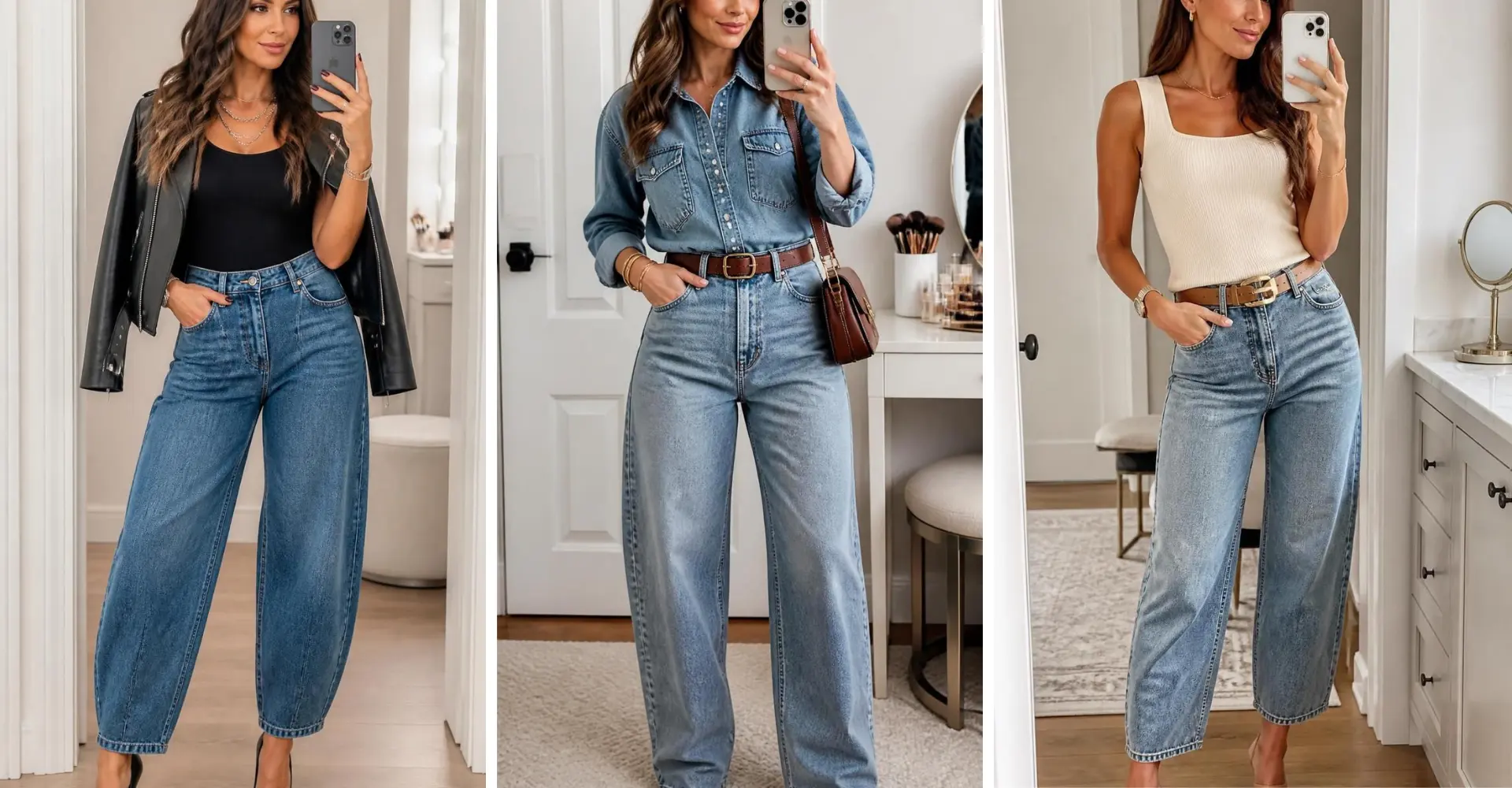
If your stomach is the first thing your jeans seem to notice, you already know how frustrating denim shopping can get. Waistbands that dig in, thighs that gap, or a fit that just never sits quite right — an apple shape body has its own rules, and most jeans on the rack simply weren’t cut with those rules in mind.
The good news is that the right jeans can completely change how your outfit sits and how you feel in it. Once you understand which cuts work with your shape instead of against it, denim shopping stops being a guessing game and starts being genuinely fun.
Here are the jeans styles, fabrics, and styling tricks that actually work for an apple shape — plus a few mistakes worth skipping.
1. Slim-Fit Jeans to Balance Your Shoulders and Middle
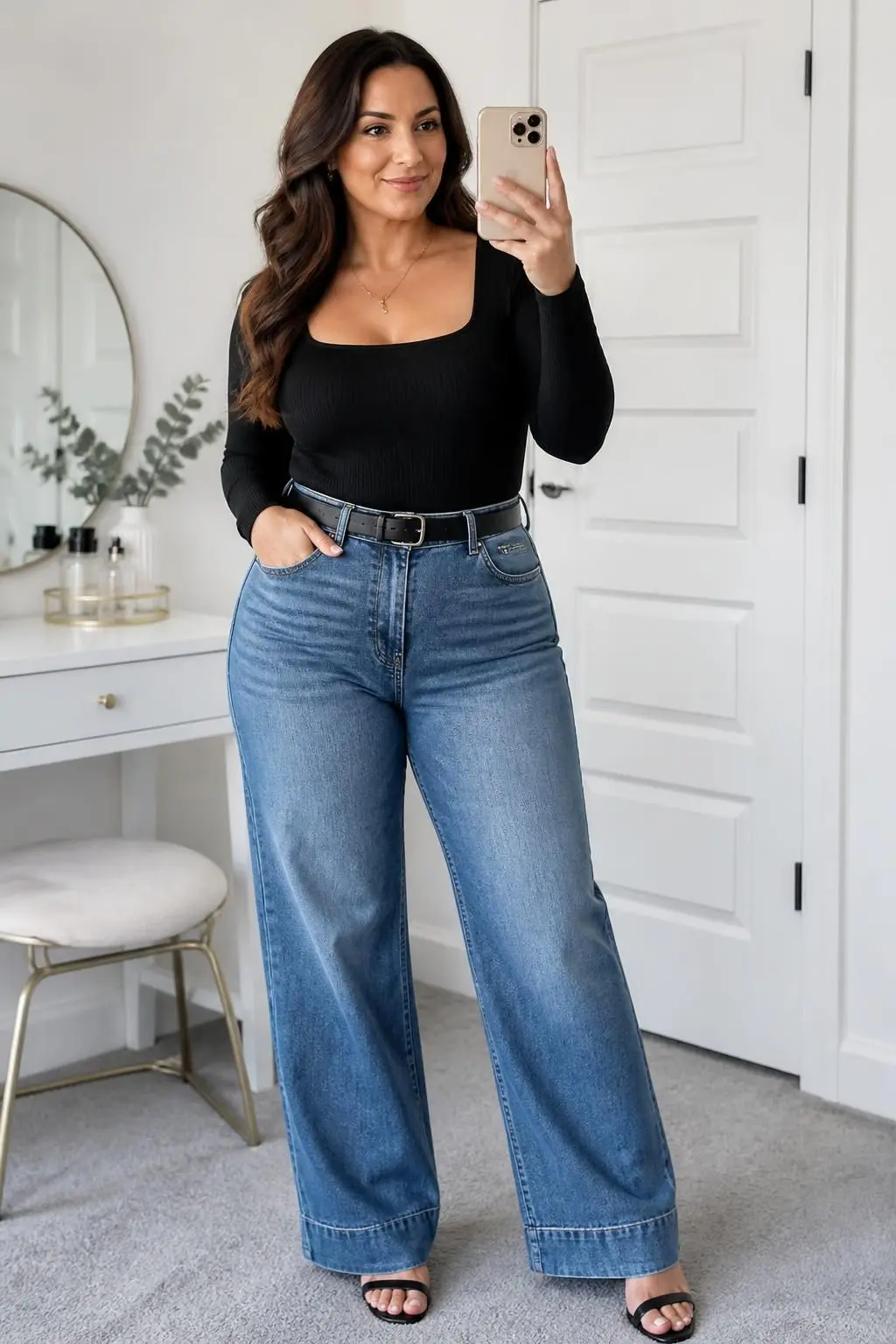
Slim-fit jeans sit close to the leg without the extreme tightness of skinny styles, which makes them one of the easiest wins for an apple shape. They skim the thigh and calf rather than clinging, so your legs get definition instead of looking squeezed.
Because your shoulders and bust tend to be your widest point, a slim leg underneath creates a grounded, balanced silhouette from top to bottom. Pair them with a loose or oversized top and the contrast works beautifully instead of looking sloppy.
Tips for Wearing Slim-Fit Jeans
Keep the rise mid-level. A mid-rise slim jean avoids digging into your midsection while still holding its shape. Cuff the ankle slightly. A small cuff shows off your ankle and keeps the leg line from looking too heavy.
2. Wide-Leg Jeans for a Curvier, Hourglass Look
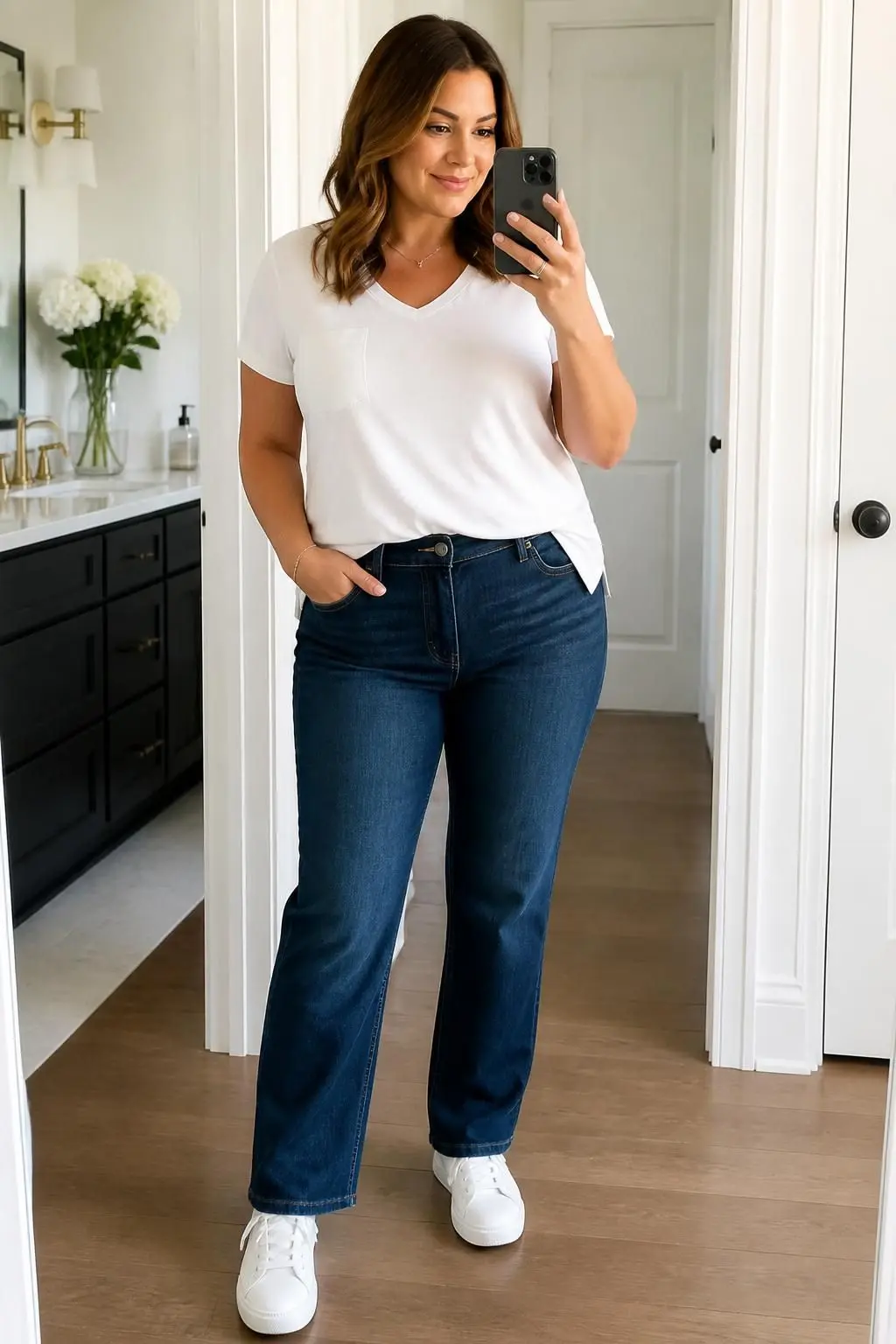
Wide-leg jeans are the most forgiving style for anyone carrying weight around the middle, and they happen to look incredibly chic right now. The flare starting from the hip adds visual weight to your lower body, which naturally offsets a fuller midsection.
They also do something clever: by skimming past the waist and hips instead of hugging them, wide-leg jeans create the illusion of an hourglass rather than drawing a hard line around your stomach. Just make sure the waistband sits comfortably rather than gaping, since too loose a fit can undo the balance you’re going for.
Tips for Styling Wide-Leg Jeans
Tuck in a fitted top. This defines your waist without adding bulk, letting the wide leg do the balancing work. Add heels or platform shoes. Extra height keeps the wide silhouette from overwhelming a shorter frame.
3. Straight-Leg Jeans for a No-Fuss Everyday Fit
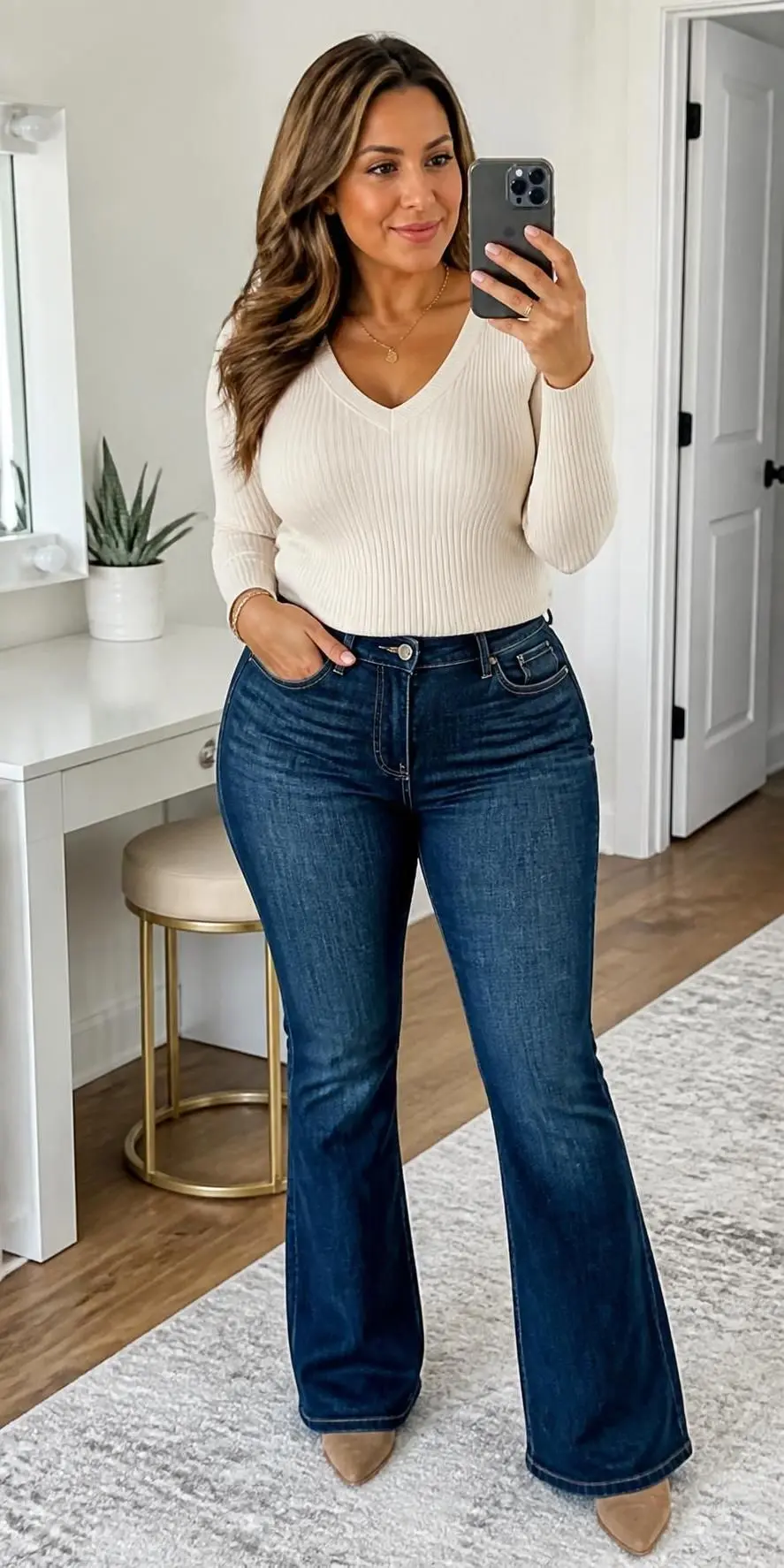
If wide-leg denim feels like too big a jump, straight-leg jeans are the perfect middle ground. They run in a clean, consistent line from hip to ankle, giving you a similar balancing effect without the drama of a full flare.
Straight-leg cuts are also incredibly versatile for everyday wear, going just as easily with sneakers as they do with boots or heels. Starting with a slightly relaxed straight-leg style, rather than a snug one, gives you room to see how much structure your body actually needs before committing to wider cuts.
Tips for Everyday Straight-Leg Styling
Go for a relaxed straight cut first. It’s the easiest transition style if you’re used to skinny jeans. Roll the hem for a cropped look. This works especially well with ankle boots or loafers.
4. Bootcut and Flared Jeans for Extra Curve at the Hem

For apple shapes carrying more weight through the midsection, bootcut and flared jeans add proportion exactly where it’s needed. Instead of hiding your legs, they add visual weight to the lower half, which balances a fuller stomach beautifully.
The difference between the two comes down to how dramatic you want the flare. Bootcut jeans stay narrow through the knee with a slight kick at the ankle, while flared jeans widen gradually for a fuller, floor-skimming finish. Either way, this shape keeps attention moving down and out, away from the midsection.
Tips for Bootcut vs. Flared
Choose bootcut for daily wear. It’s subtler and pairs easily with fitted tops. Save flared jeans for a statement look. They work best with a heeled boot underneath to keep the hem from dragging.
5. Mid-Rise Waistbands for the Right Placement

Rise matters just as much as leg shape for an apple body. High-rise jeans often sit above a smaller torso in a way that looks stiff, while low-rise jeans tend to slide down thanks to narrower hips, creating the exact bulge you’re trying to avoid.
Mid-rise jeans land in the sweet spot, sitting comfortably at the natural waist without squeezing your stomach or exposing more than you’d like when you sit or bend. This one adjustment alone can make almost any jean style feel more flattering.
Tips for Getting the Rise Right
Try the sitting test in store. If a mid-rise jean stays put and doesn’t gap at the back when you sit, it’s a good fit. Avoid anything that leaves a red mark. A waistband that presses too hard is a sign to size up or try a different cut.
6. Non-Stretch or Heavier Denim for Real Structure
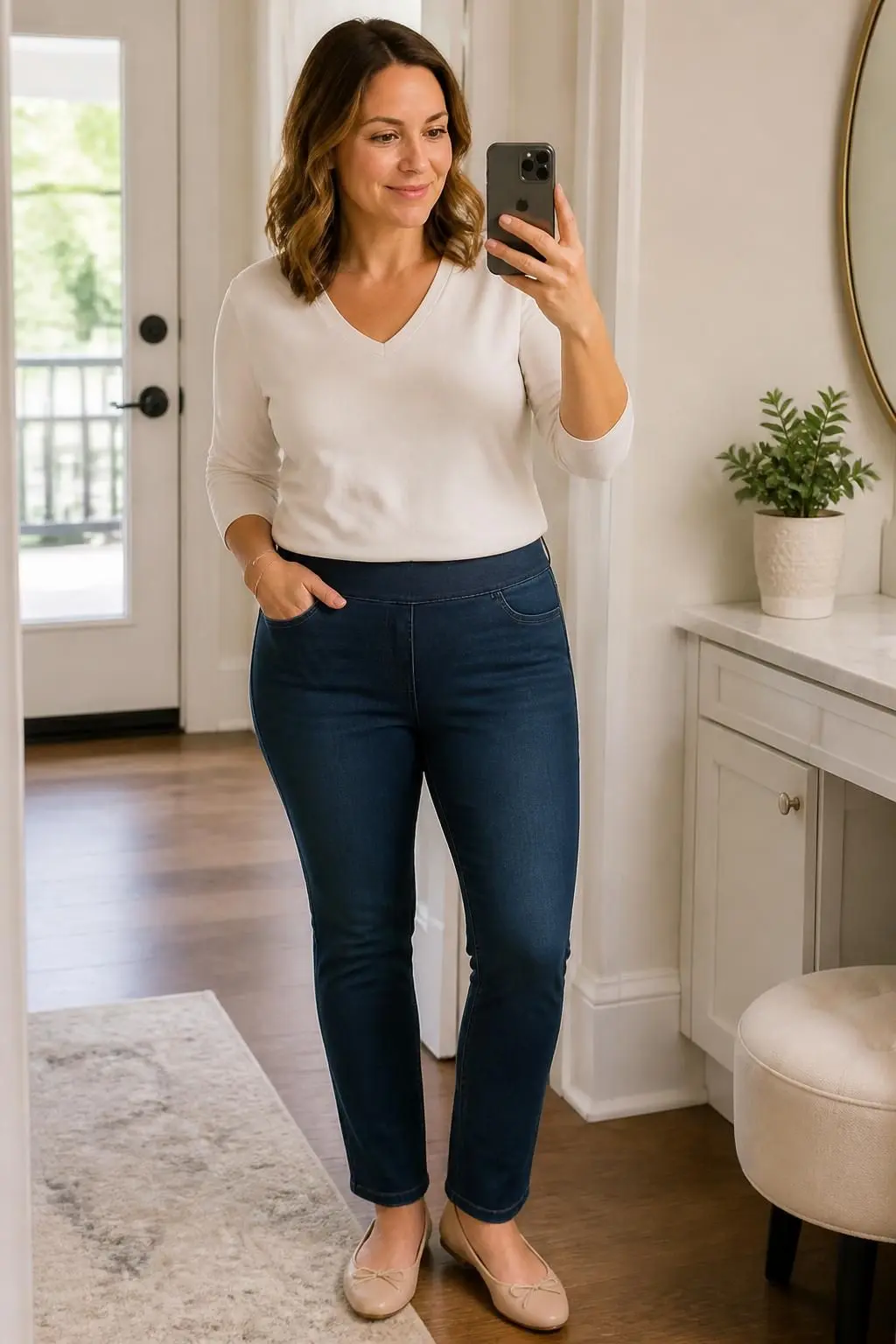
Fabric weight changes everything about how a jean holds its shape. Thin, stretchy denim moves with your body, which sounds nice in theory but often means it clings exactly where you don’t want it to.
Heavier, non-stretch or low-stretch denim holds its own structure instead of molding to every curve, giving your lower half a cleaner, more defined line. If rigid denim feels too stiff for daily comfort, look for a heavyweight fabric with just a touch of stretch — you get the structure without sacrificing movement.
Tips for Choosing the Right Fabric
Check the stretch percentage on the tag. Anything under 2% stretch will hold its shape far better than jeggings-style denim. Break in stiff denim slowly. Wear new non-stretch jeans around the house first so they mold to you, not the other way around.
7. Pull-On Jeans Instead of Button-Fly Styles
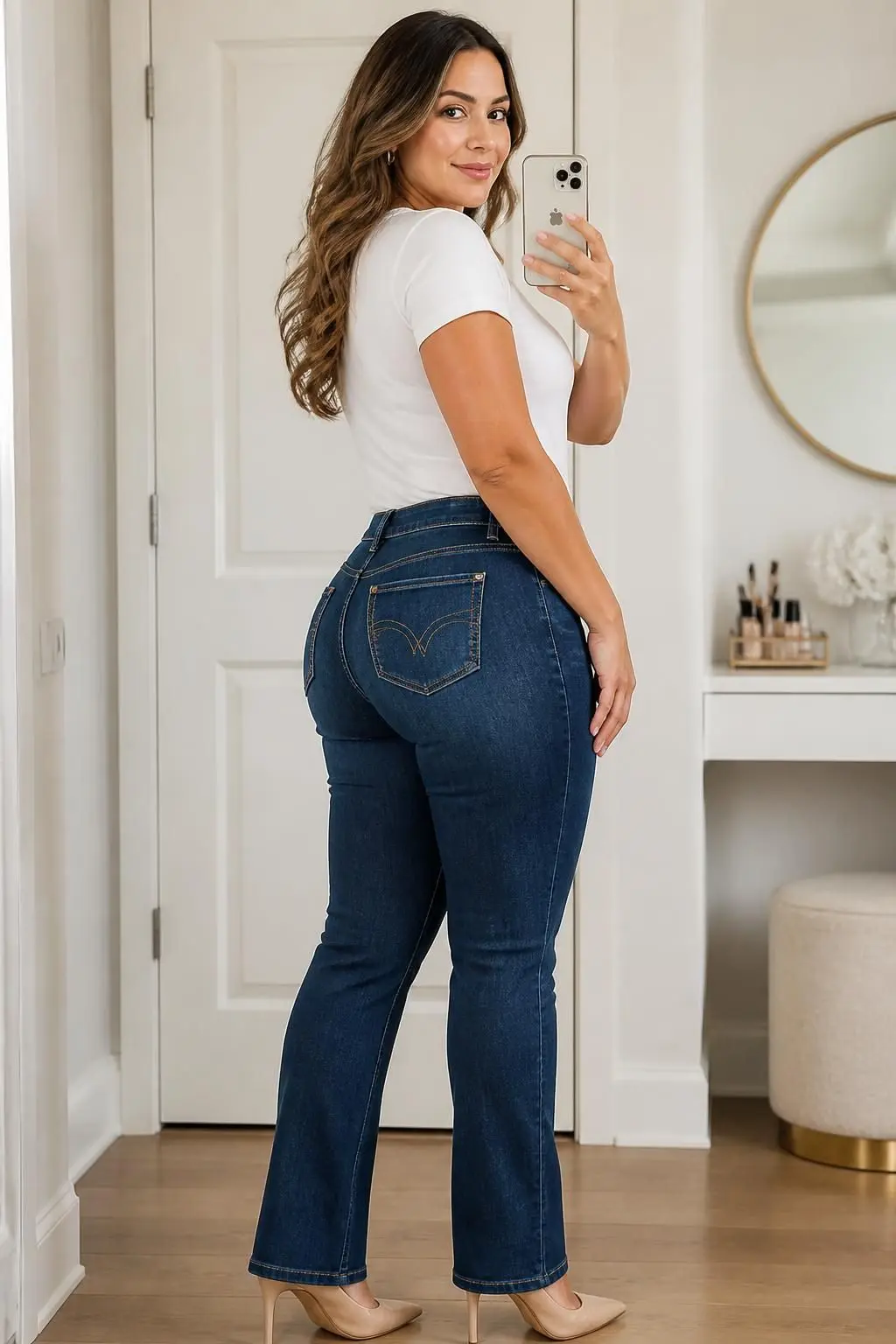
Button-fly jeans add a small but noticeable bump right at your midsection, which is the last thing an apple shape needs. Pull-on jeans with an elastic waistband skip that bulk entirely while still looking like structured, styled denim from the outside.
Good-quality pull-on jeans hold their elasticity for years, not months, so you’re not sacrificing durability for comfort. They also save time getting dressed and remove any worry about a button popping open during the day.
Tips for Finding Good Pull-On Denim
Feel the waistband thickness before buying. A wider, more structured elastic band holds its shape longer than a thin one. Check reviews for stretch-out complaints. Quality pull-on jeans should bounce back after wear, not loosen permanently.
8. Back Pocket Details That Add Shape to Your Hips
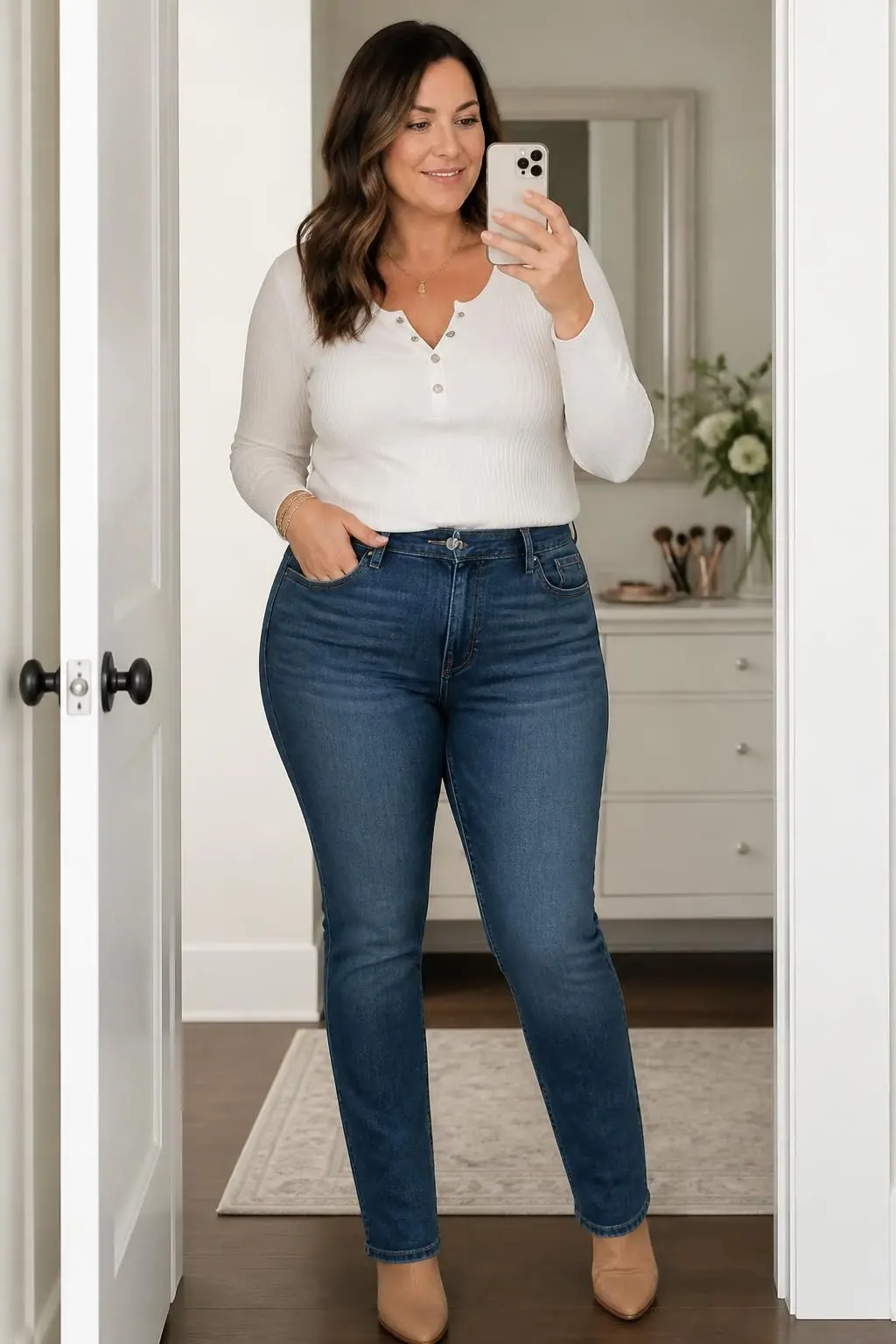
Since apple shapes often have flatter, narrower hips, back pocket placement becomes a genuinely useful styling tool. Pockets add visual mass exactly where you want more curve, while front pockets tend to add unwanted bulk to your stomach instead.
Where the pockets sit matters too. Centered pockets work well if your seat is flatter, while pockets placed slightly higher help lift the appearance of a lower or sagging seat. Small details like embellishment or stitching on the pocket can add even more dimension.



Tips for Choosing Pocket Placement
Pick centered pockets for a flatter seat. This adds the illusion of curve without changing your actual shape. Choose higher-set pockets for extra lift. These visually raise a fuller or lower-sitting seat.
9. Size Down for a Better Long-Term Fit
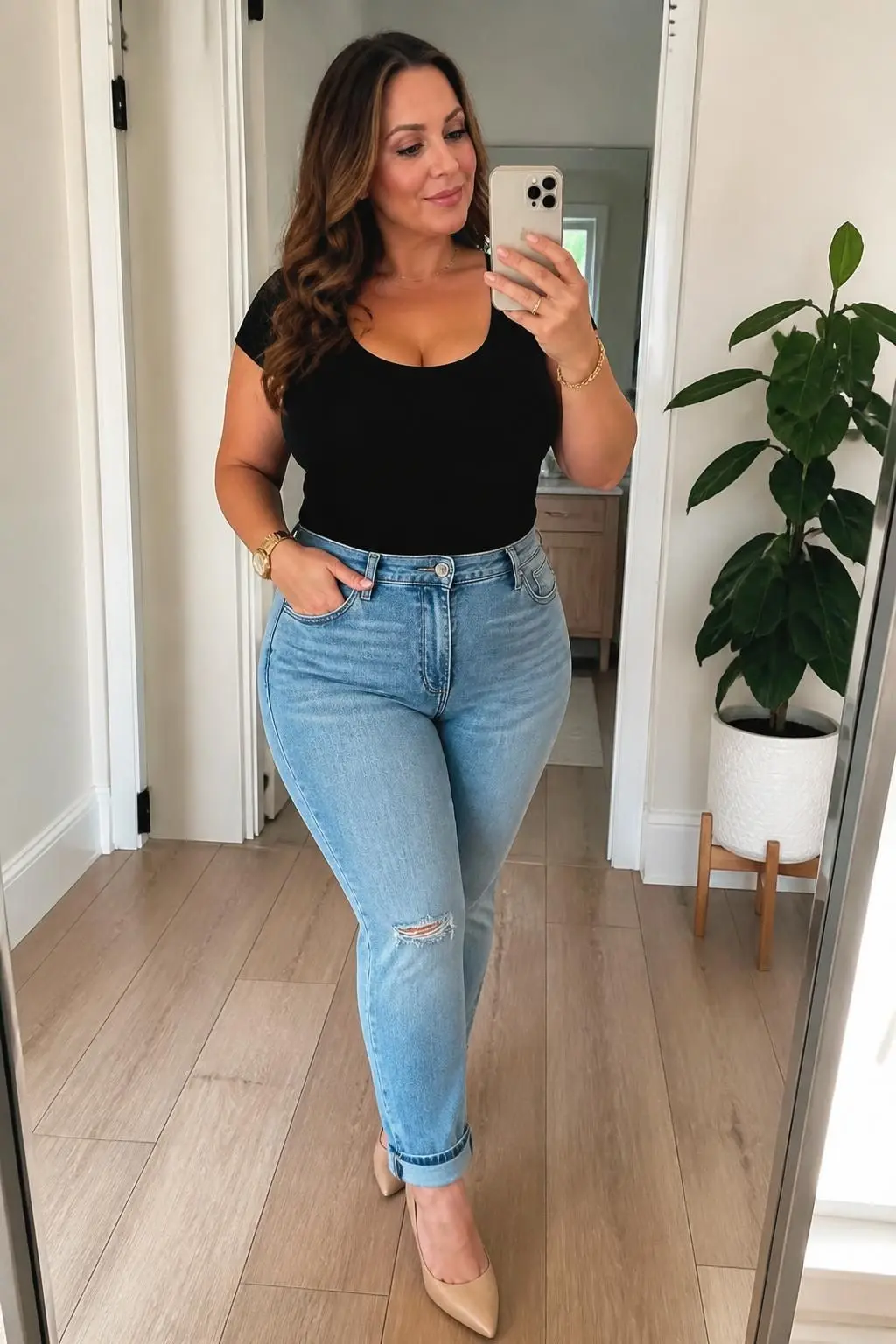
It’s tempting to buy jeans a size up for immediate comfort, but for an apple shape, that habit usually backfires. Extra room in the waist often means the jeans slide down throughout the day, creating exactly the gap-and-slip problem you’re trying to avoid.
Instead, choose the smallest size that fits comfortably without cutting off circulation. Denim naturally gives and molds to your body within a few wears, so a snug first fit almost always becomes the perfect fit later.
Tips for Sizing Jeans Correctly
Expect a half-size of stretch-out. Most denim loosens slightly after 3–4 wears, so buy snug rather than loose. Sit down before deciding. If jeans feel wearable while seated, they’ll only get more comfortable standing.
10. Light Wash Denim to Draw Attention to Your Legs
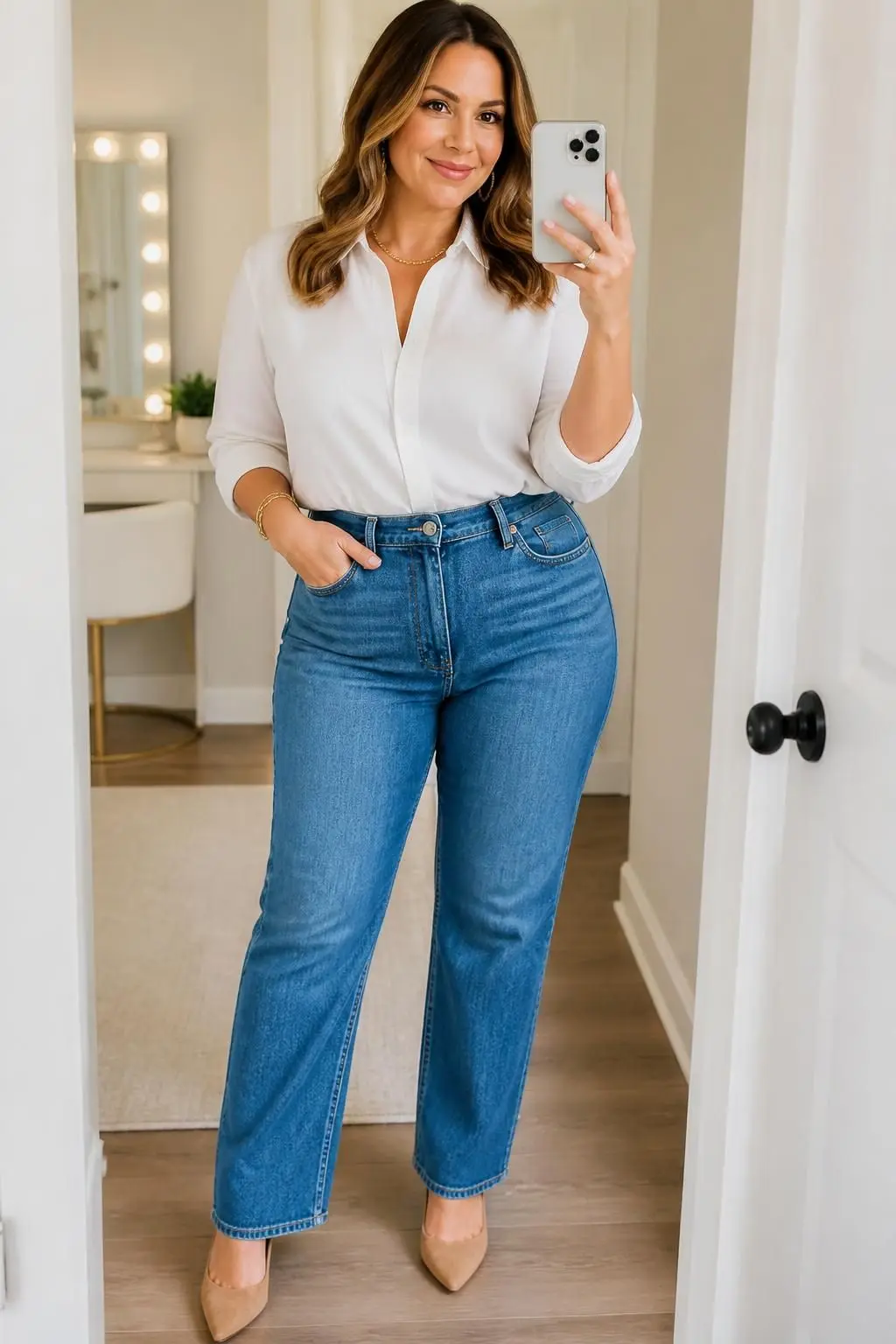
Color and wash play a bigger role in shaping perception than most people realize. Light or medium wash denim naturally draws the eye downward toward your legs, especially when paired with a darker top up top.
This contrast — dark on top, light on the bottom — pulls focus away from your midsection and onto your legs, which tend to be one of the strongest features on an apple shape. Details like whiskering, fading, or embellished hems add even more interest to the lower half.
Tips for Choosing the Right Wash
Pair light denim with darker tops. The contrast naturally shifts visual weight downward. Add texture through the hem. Frayed or distressed hems keep the eye moving along your leg line.
11. Skip Skinny Jeans and Cropped Tops With Mid-Rise Denim
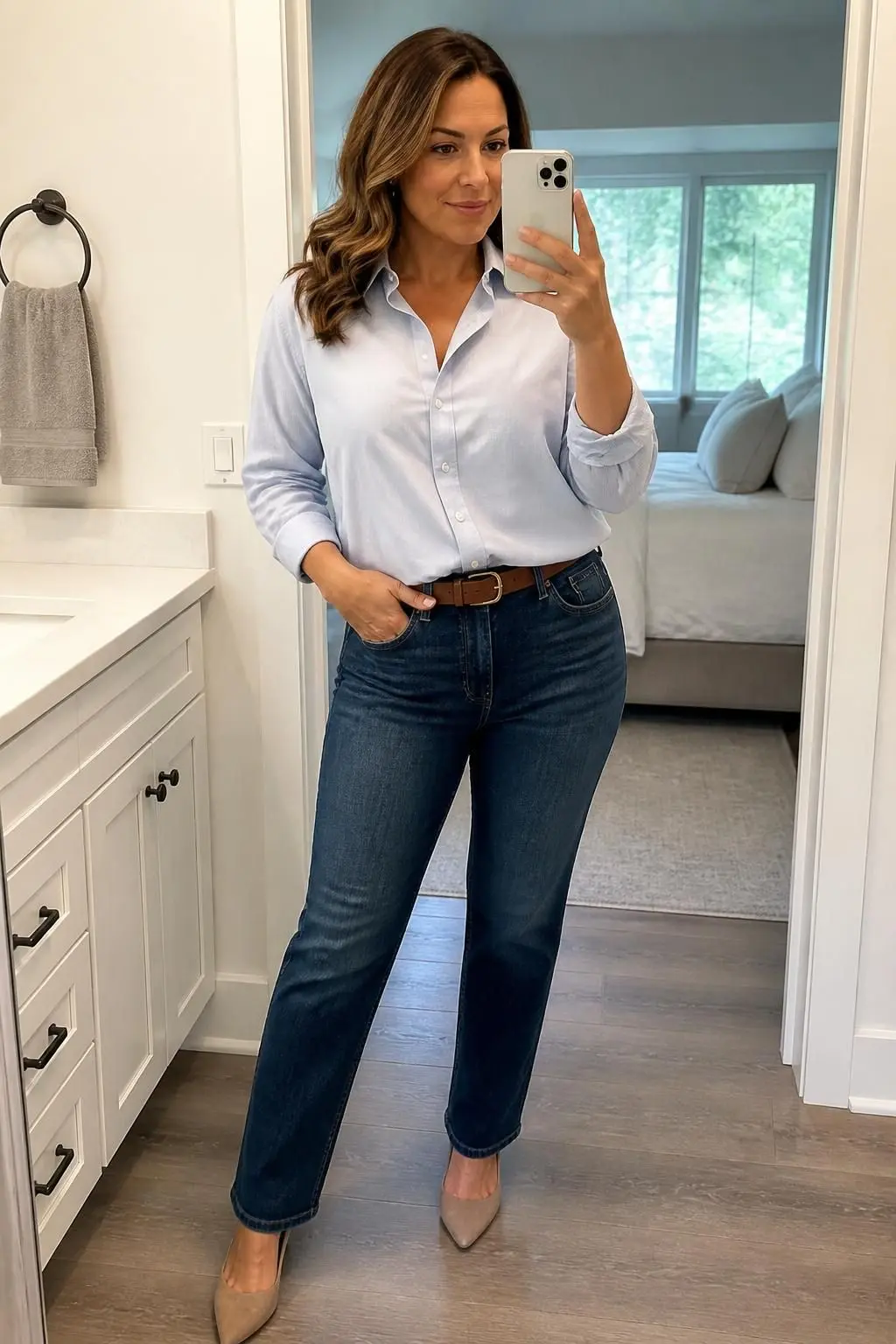
Knowing what to avoid is just as valuable as knowing what to wear. Skinny jeans cling tightly through the thigh and calf, which pulls all the visual attention upward to your broader shoulders instead of balancing your frame.
The same goes for pairing mid-rise jeans with cropped or short tops. Since your waist is already your most prominent area, any top that ends right at or above it only draws more attention there. A longer top or one that hits at the hip keeps the proportions working in your favor instead of against them.
Tips for Avoiding Common Fit Mistakes
Swap skinny jeans for slim or straight cuts. You’ll get the same polished look without the squeeze. Choose hip-length tops with mid-rise jeans. This keeps your waistline from becoming the focal point.
12. Tuck In and Belt to Define Your Waist on Your Terms

Instead of letting your waistline sit undefined, use a tuck and a thin belt to control exactly where the definition happens. A front-tuck or French tuck with a slim belt creates a clear waistline without the pressure of a tight waistband.
This trick works especially well with wide-leg or straight jeans, since the volume below balances the definition up top. It’s a small styling move that instantly makes an outfit look more put-together and intentional.
Tips for Tucking and Belting
Use a soft, unstructured belt. A stiff belt can dig in, while a soft one defines without discomfort. Try a half-tuck for a more relaxed look. It still shows shape while feeling less formal than a full tuck.
13. Choose Necklines That Pull Focus Upward

What happens above your jeans matters just as much as the denim itself. V-necks, sweetheart necklines, and off-shoulder tops draw the eye toward your collarbone and shoulders, which are naturally your strongest, most defined area.
Statement earrings, a bold necklace, or a printed scarf near the face work the same way — they redirect attention upward and away from the midsection, without you needing to hide or overthink your jeans at all.
Tips for Necklines That Work With Any Jean Style
Save busy prints and embellishments for the top half. Keep the bottom half simple so the eye travels up. Try a plunge or V-neck with wide-leg jeans. This combination balances volume on both ends of your outfit.
FAQs
What jeans should apple-shaped women avoid? Skinny jeans and low-rise styles are the biggest culprits, since they either cling to the thigh and draw attention upward or slip down and create a visible bulge at the waist.
Is mid-rise or high-rise better for an apple shape? Mid-rise is usually more flattering, since high-rise can sit awkwardly on a shorter torso while low-rise tends to slide and expose the midsection.
Do wide-leg jeans make you look bigger? Not when sized correctly. A wide-leg jean that fits well at the hip actually balances a fuller midsection instead of adding bulk.
Should apple shapes wear light or dark denim? Light wash denim on the legs paired with a darker top creates a flattering contrast that shifts visual focus downward, away from the stomach.
Are pull-on jeans as flattering as button-fly ones? Yes, and often more so. Pull-on styles avoid the extra bulk a button and zipper add at the stomach while still looking structured from the outside.
Can bootcut jeans work for a curvier apple shape? Absolutely. Bootcut and flared styles add proportion at the hem, which balances a fuller midsection better than a fully fitted leg.
Why Fabric Weight Changes Everything for Apple Shapes
Most people focus on cut and rise but overlook fabric weight, which quietly makes or breaks how jeans sit on an apple shape. Heavier denim holds its structure through the day, resisting the stretch-and-sag that thin, elastic-heavy fabric develops within hours. This means fewer mid-day waistband adjustments and a cleaner silhouette from morning to night. Next time you shop, run your fingers over the fabric before checking the cut. A denim that feels substantial in your hands will almost always outperform a flimsier one on your body.
Final Words
Dressing an apple shape isn’t about hiding your body, it’s about choosing denim that works with your proportions instead of fighting them. Once you find your go-to rise, fabric weight, and leg shape, jean shopping stops feeling like trial and error and starts feeling like second nature. Keep this list handy, save it for your next shopping trip, and build a denim rotation that actually makes you feel good every time you put it on.
Don't miss the next one
Quick outfit ideas and beauty tips, straight to your inbox.