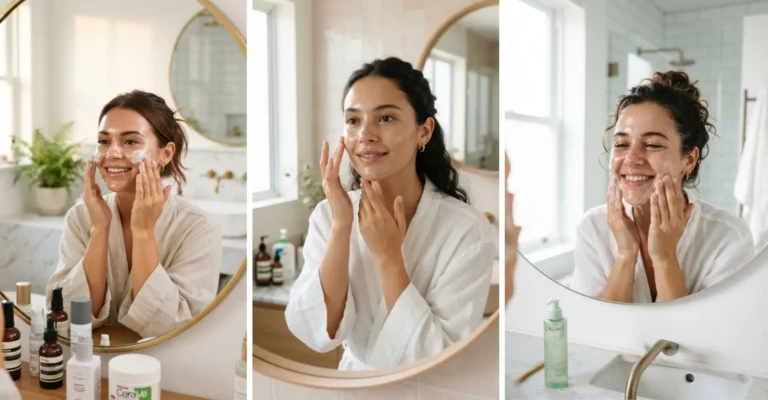

Starting a skincare routine can feel confusing when there are hundreds of cleansers, toners, serums, masks, and moisturizers competing for your attention. The good news? You don’t need a complicated 10- or 12-step routine to take good care of your skin.
The best skincare routine is one that matches your skin type, addresses your main concerns, and is simple enough to follow consistently. Start with the essentials, learn how your skin responds, and introduce additional products gradually.
First, Figure Out Your Skin Type
Before buying skincare products, take a few minutes to understand your skin. Your skin type can help you choose formulas that hydrate without feeling heavy, control excess oil without over-drying, and minimize unnecessary irritation.
Dry Skin
Dry skin often feels tight, rough, flaky, or uncomfortable, particularly after cleansing. It usually benefits from gentle cleansers and richer moisturizing ingredients.
Oily Skin
Oily skin tends to produce more sebum and may develop shine quickly after washing. Lightweight, non-comedogenic products are often a comfortable choice.
Combination Skin
Combination skin usually has an oilier forehead, nose, and chin while the cheeks may feel normal or dry. You may need to balance products according to different areas of your face.
Sensitive Skin
Sensitive skin can become red, itchy, burning, or irritated easily. Simple formulas with fewer potential irritants are usually a better starting point.
How to Tell What Your Skin Type Is
Wash your face with a gentle cleanser and leave your skin bare for around 15–20 minutes. Don’t apply moisturizer, serum, or other skincare during this time.
Then notice how your skin feels and looks. If your entire face feels tight or dry, you may have dry skin. If your face becomes noticeably shiny, especially across several areas, you may have oily skin. If the shine is mostly concentrated around your forehead, nose, and chin while your cheeks remain comfortable or dry, you may have combination skin.
Remember that skin can change with weather, hormones, age, medications, and lifestyle, so your skin type isn’t necessarily permanent.
The Simple Beginner Skincare Routine
If you’re completely new to skincare, don’t overwhelm yourself with too many products. A basic routine can be built around three essential steps: cleansing, moisturizing, and sun protection.
1. Cleanse Your Skin
Cleansing is the first step because it removes sweat, excess oil, makeup, sunscreen, dirt, and everyday buildup from your skin.
Choose your cleanser according to how your skin behaves. A gentle foaming or gel cleanser may work well for oily skin, while dry skin often feels better with a creamy or hydrating cleanser. If you have sensitive skin, look for a mild formula without unnecessary fragrance or harsh ingredients.
You don’t always need an aggressive cleanse. Over-cleansing can leave your skin feeling tight and irritated.
For many people, cleansing morning and night works well. If your skin is extremely dry or sensitive, you may prefer a gentle morning rinse and a proper cleanse in the evening.
2. Moisturize
Don’t skip moisturizer just because your skin is oily. Every skin type needs hydration and support for its protective barrier.
If you have oily or combination skin, try a lightweight lotion or gel moisturizer. Dry skin generally prefers a richer cream containing moisturizing and barrier-supporting ingredients.
Look for non-comedogenic formulas if you’re prone to clogged pores. If your skin is sensitive, a fragrance-free moisturizer can also be a useful choice.
Applying moisturizer while your skin is slightly damp can help reduce moisture loss and leave your skin feeling softer.
3. Apply Sunscreen
Sunscreen is the most important morning skincare step because UV exposure contributes to premature skin aging, uneven pigmentation, and sun damage.
Choose a broad-spectrum sunscreen with at least SPF 30. Pick a texture that you’ll actually enjoy wearing every day. Lightweight gel or fluid formulas can feel comfortable on oily skin, while creamier formulas may work well for dry skin.
Apply enough sunscreen to cover your exposed skin and reapply when you’re spending extended time outdoors, especially after sweating or swimming.
Want to Add More Steps? Build Slowly
Once your basic routine feels comfortable, you can add targeted products. You don’t need every extra step, and more products don’t automatically mean better skin.
4. Add a Toner
Toner is optional rather than essential. Modern toners can provide hydration, soothing ingredients, or gentle exfoliation depending on the formula.
A hydrating toner or mist may be useful for dry or sensitive skin. If your skin is oily or congested, you might prefer a toner containing a gentle exfoliating ingredient.
Just remember that toner isn’t necessary for everyone, and it can’t permanently shrink your pores.
5. Try an Essence
Essences are lightweight skincare products designed primarily to add hydration and prepare the skin for subsequent products.
They’re particularly popular in multi-step Asian skincare routines, but they’re completely optional. If your cleanser, moisturizer, and sunscreen are already keeping your skin comfortable, you don’t have to add an essence.
6. Choose a Serum for Your Main Concern
Serums are concentrated products designed to target particular skincare concerns. Instead of collecting several serums, start with one that addresses your biggest priority.
For example:
- Hyaluronic acid: helps support hydration
- Vitamin C: commonly used for antioxidant protection and brighter-looking skin
- Niacinamide: can support the skin barrier and help with excess oil and uneven appearance
- Retinoids: commonly used for acne and signs of skin aging
- Azelaic acid: can be useful for acne and uneven pigmentation
- AHAs/BHAs: exfoliating ingredients that can help with certain types of congestion and uneven texture
Introduce active ingredients slowly. Using multiple powerful treatments at once can make irritation much more likely.
7. Use a Sheet Mask Occasionally
Sheet masks aren’t required for healthy skin, but they can be a relaxing addition when you want extra hydration.
They’re generally best treated as an occasional step rather than something you absolutely need every day. Choose a mask based on what your skin actually needs instead of simply following trends.
8. Consider an Eye Cream
Eye creams are another optional step. The skin around your eyes is delicate, and a suitable product can provide additional hydration.



If you experience dryness or puffiness around your eyes, an eye product may be worth trying. However, you don’t necessarily need a separate eye cream if your regular moisturizer is already comfortable and suitable for that area.
Skincare Routine for Specific Concerns
Once you understand the basics, you can customize your routine around a particular concern. The key is to avoid throwing several active ingredients onto your skin at the same time.
Always patch test new products when appropriate and stop using anything that causes significant irritation.
Skincare for Signs of Aging
Aging is a natural process, but a consistent skincare routine can help maintain a healthier-looking complexion.
Useful ingredients to consider include:
- Retinoids
- Vitamin C
- Niacinamide
- Peptides
- Ceramides
- Sunscreen
The simplest anti-aging routine is often the most sustainable: gentle cleansing, moisturizer, daily sunscreen, and one targeted active introduced gradually.
Skincare for Acne-Prone Skin
Acne can happen when oil, dead skin cells, and other factors contribute to clogged pores and inflammation.
Ingredients commonly used in acne-focused skincare include:
- Salicylic acid
- Benzoyl peroxide
- Azelaic acid
- Retinoids
- Niacinamide
- Glycolic acid
Don’t use every acne treatment simultaneously. Start with one targeted ingredient and give your skin time to adjust.
If acne is painful, severe, persistent, or leaving scars, professional dermatological advice is worth considering.
Skincare for Hyperpigmentation and Dark Spots
Dark spots can develop for many different reasons, including acne, inflammation, sun exposure, and hormonal changes. Finding the underlying trigger is an important part of choosing an effective routine.
Ingredients that may help improve the appearance of uneven pigmentation include:
- Vitamin C
- Azelaic acid
- Alpha arbutin
- Retinoids
- AHAs and BHAs
- Sunscreen
Daily sun protection is particularly important because UV exposure can make pigmentation more noticeable and interfere with your progress.
Skincare for Sensitive Skin
Sensitive skin usually benefits from simplicity. Instead of constantly adding new treatments, focus on protecting the skin barrier.
Helpful ingredients can include:
- Ceramides
- Hyaluronic acid
- Squalane
- Colloidal oatmeal
- Niacinamide
- Bakuchiol
Consider avoiding products with strong fragrance or unnecessarily harsh ingredients if they tend to irritate your skin.
Things to Consider Before Starting a New Routine
Pregnancy and Breastfeeding
Pregnancy can change how your skin behaves, and some skincare ingredients may not be appropriate during pregnancy. Retinoids are one important example.
If you’re pregnant, trying to conceive, or breastfeeding, check with your healthcare professional before introducing treatment-focused skincare.
Skin of Color
People with darker skin tones can be more prone to visible post-inflammatory hyperpigmentation after irritation or inflammation. Gentle skincare and consistent sun protection can therefore be especially important.
If you’re dealing with persistent or unexplained pigmentation, a dermatologist can help identify the cause and recommend appropriate treatment.
Existing Skin Conditions
If you have eczema, psoriasis, rosacea, significant allergies, or another diagnosed skin condition, a standard skincare routine may not be enough.
A dermatologist can help you identify ingredients and products that are appropriate for your particular skin.
The Correct Order of Skincare Products
If you’re wondering what goes first, keep this simple rule in mind: apply products from lighter textures to heavier ones, while sunscreen should be the final step of your morning skincare routine.
Morning
Cleanser → Toner (optional) → Essence (optional) → Serum → Moisturizer → Sunscreen
Night
Cleanser → Toner (optional) → Essence (optional) → Treatment/Serum → Moisturizer
You don’t need to use every product every day. Your routine should be built around what your skin actually needs.
Consistency Matters More Than a Huge Product Collection
The biggest skincare mistake beginners make is constantly changing products because they expect instant results.
Give your routine time. Introduce new products one at a time, patch test when appropriate, and pay attention to how your skin responds.
You also don’t need to follow someone else’s exact routine. Your friend’s favorite serum may not work for you, and a 10-step routine isn’t automatically better than a three-step routine.
Start with a gentle cleanser, moisturizer, and sunscreen. Once those basics are working well, add targeted products only when you have a specific reason to use them.
Healthy-looking skin comes from consistency, patience, and choosing products that fit your skin—not from having the longest skincare shelf.
Don't miss the next one
Quick outfit ideas and beauty tips, straight to your inbox.